You did everything right. So why do you still feel like a fraud?
Helping people replace self-doubt with confidence during one of life's biggest identity shifts.
Take The Assessment
Have you ever said this to yourself?
- I just got lucky.
- They only picked me because they needed someone.
- If I ask for help, they’ll know I don’t belong here.
- Everyone else has it figured out. I’m the only one faking it.
- I can’t celebrate this. What if I can’t do it again?
If you nodded at even one of these, keep reading. You’re not broken. You’re not alone. And you’re definitely not an imposter.

The Science
It has a name: the Imposter Phenomenon.
Scientists have studied it since 1978. It’s the persistent belief that your success isn’t real, that you’ve fooled everyone, and that any day now, the truth comes out.
It’s not a confidence problem. It’s not a competence problem. Research shows it hits hardest in high achievers, and it spikes during transitions: a new role, a new city, a new chapter, a new identity.
You’re not failing to adjust. Your brain is doing exactly what the science predicts. And what science can predict, you can interrupt.
Self-doubt isn’t just a feeling. It’s a tax.
- You over-prepare for everything, then credit luck when it works.
- You stay quiet in rooms you earned your way into.
- You turn down opportunities you’re qualified for.
- You hit the goal, feel relief for a day, then move the goalpost.
- You’re exhausted from performing a version of yourself that already exists.
Every year you wait, the voice gets better rehearsed. It doesn’t age out. It gets interrupted, or it gets stronger.
There’s a path out. It has three steps.
Understand it.
Learn what’s actually happening in your brain. When you can explain the pattern, it loses half its power.
Name your pattern.
Imposter feelings show up differently in different people. Find out which pattern is running yours.
Do the work, with people who get it.
Self-doubt grows in isolation. It shrinks in community. Join others doing the same work, with science-backed tools and real support.
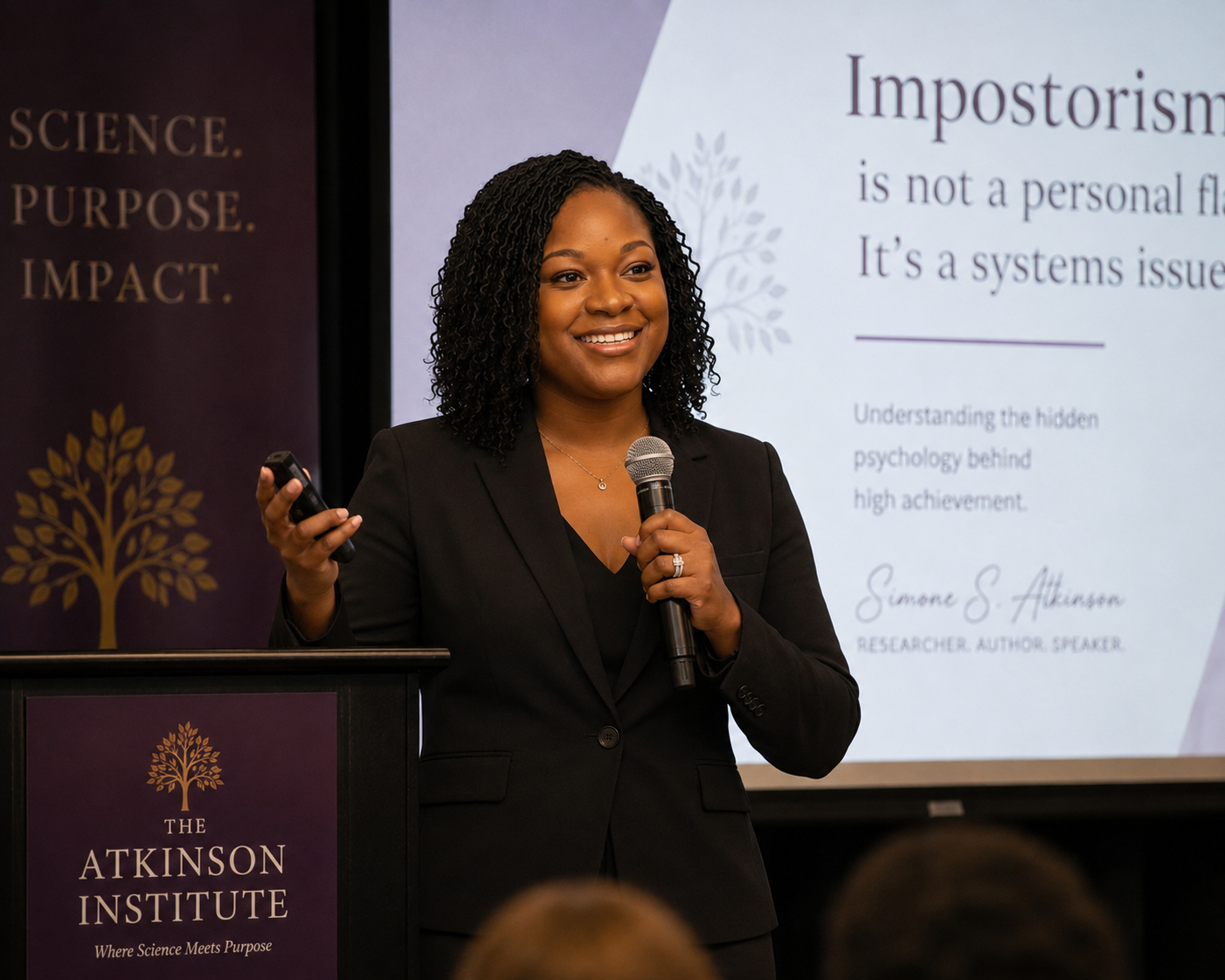
Meet Simone
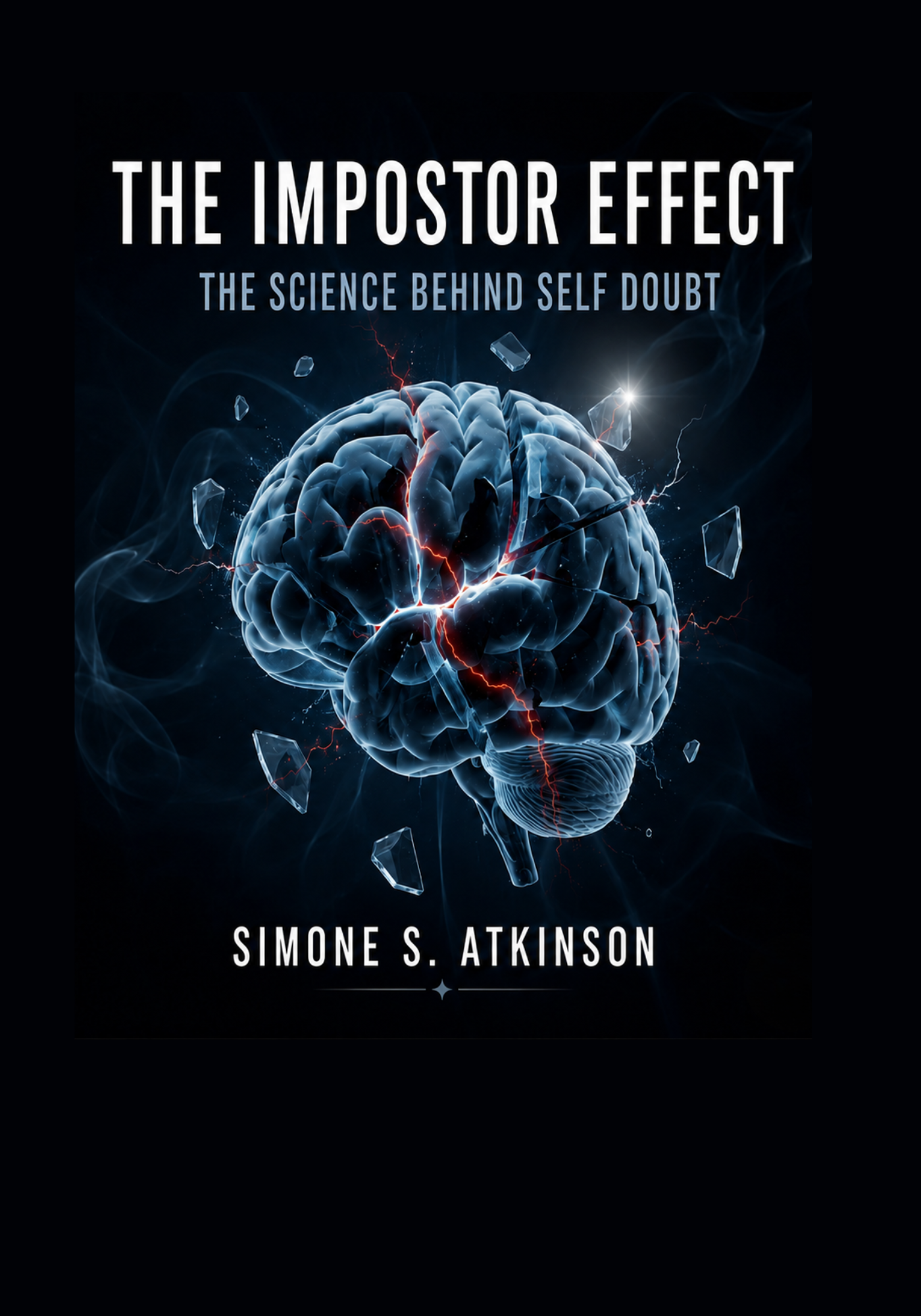
I’m Simone Atkinson, author of Almost Worthy and The Imposter Effect, and founder of The Atkinson Institute.
I’ve stood on stage accepting an award while a voice in my head said I didn’t deserve to be there. If it can happen with the credentials, the recognition, and the research knowledge, it can happen to anyone.
That’s exactly why I do this work.

“They’re going to find out.”
They’re going to find out what you’re capable of.
The voice isn’t going to quiet itself.
Take the first step. Find out what’s really driving your self-doubt, and get a plan built on science, not pep talks.
Start Here